The conversation I had with Mark So on September 5th, 2016 is best read page by page, rather than in a lengthy blog post. It’s linked here as a pdf. The analogy of falling through the floor, first brought up on page 14, became increasingly meaningful to me in the days, weeks, and months following our conversation.
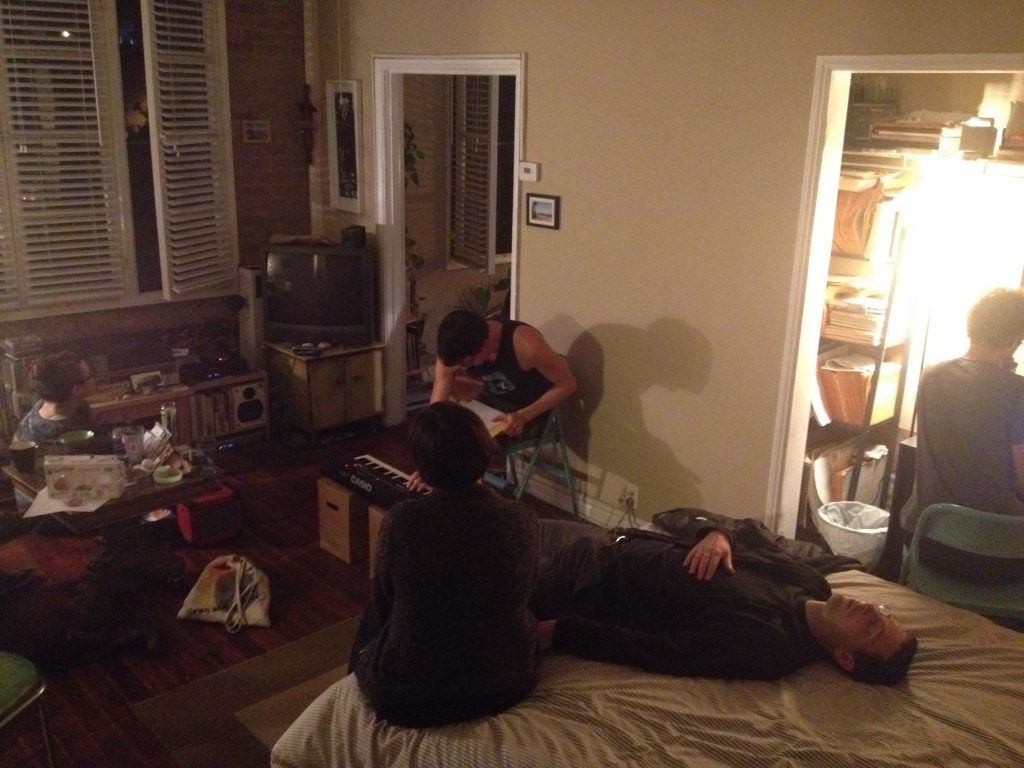
(L-R) Julia Holter, Stephanie Smith, Mark So, Liam Mooney and Stuart Krimko at “a week at midnight” listening party: Stuart’s youtube, New complaints. New rewards dvd, Julia Holter, highlights, &c. Mark’s apartment, Los Angeles, March 24, 2015
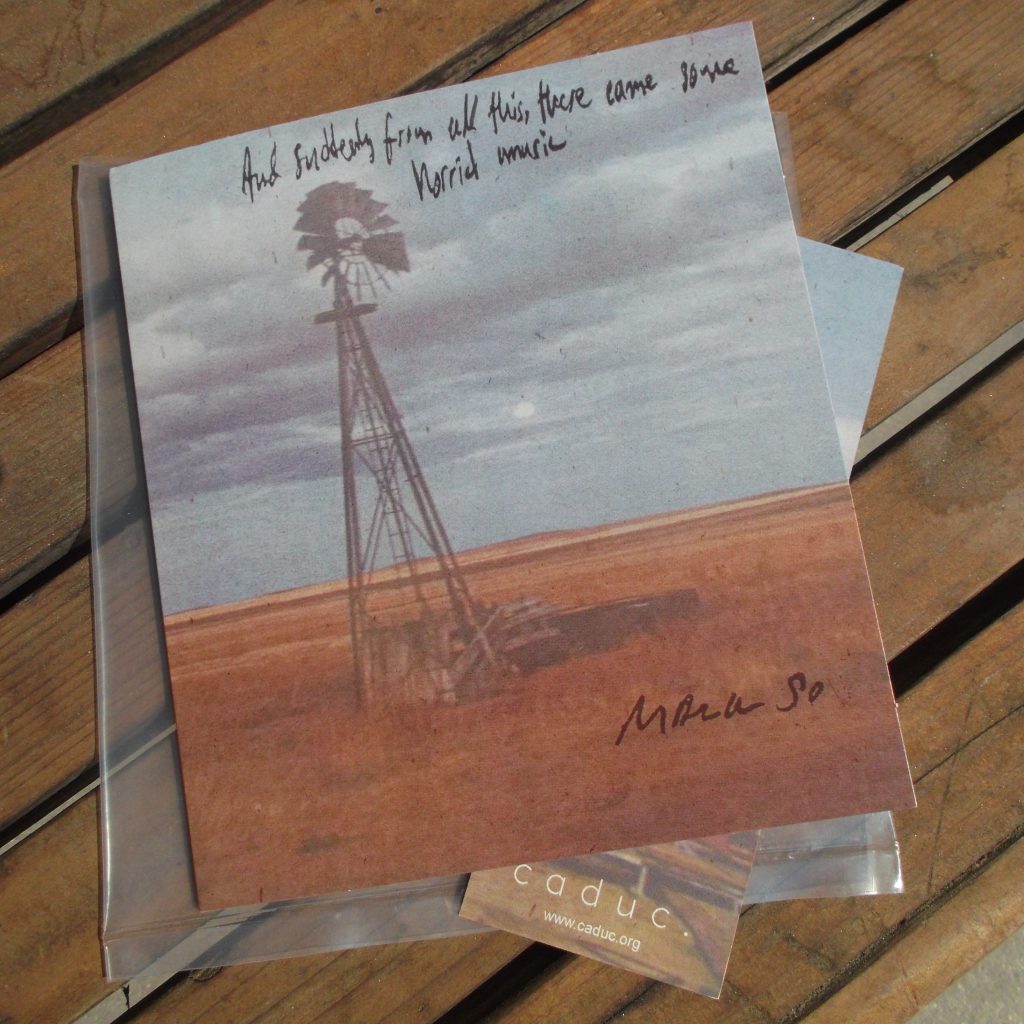
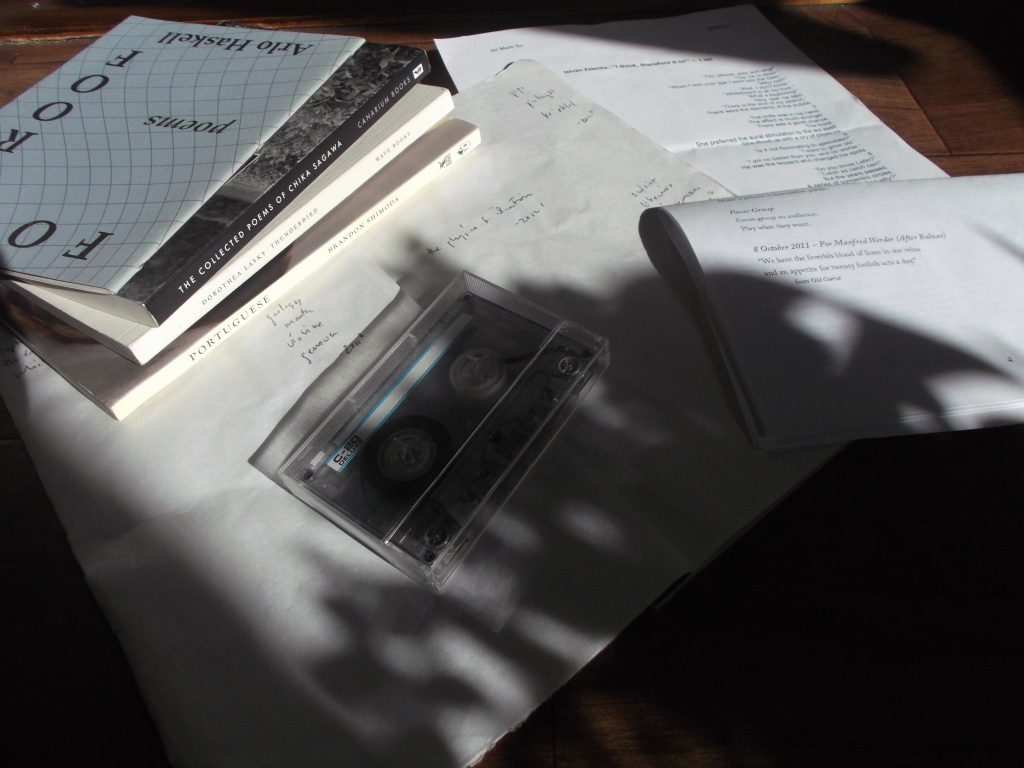
readings 54 for Manfred, flexible reading library, c20 cassette, 2016-
readings 54 (tape side A, after April 2016 recording-reading periods)
readings 54 (tape side B, after April 2016 recording-reading periods)
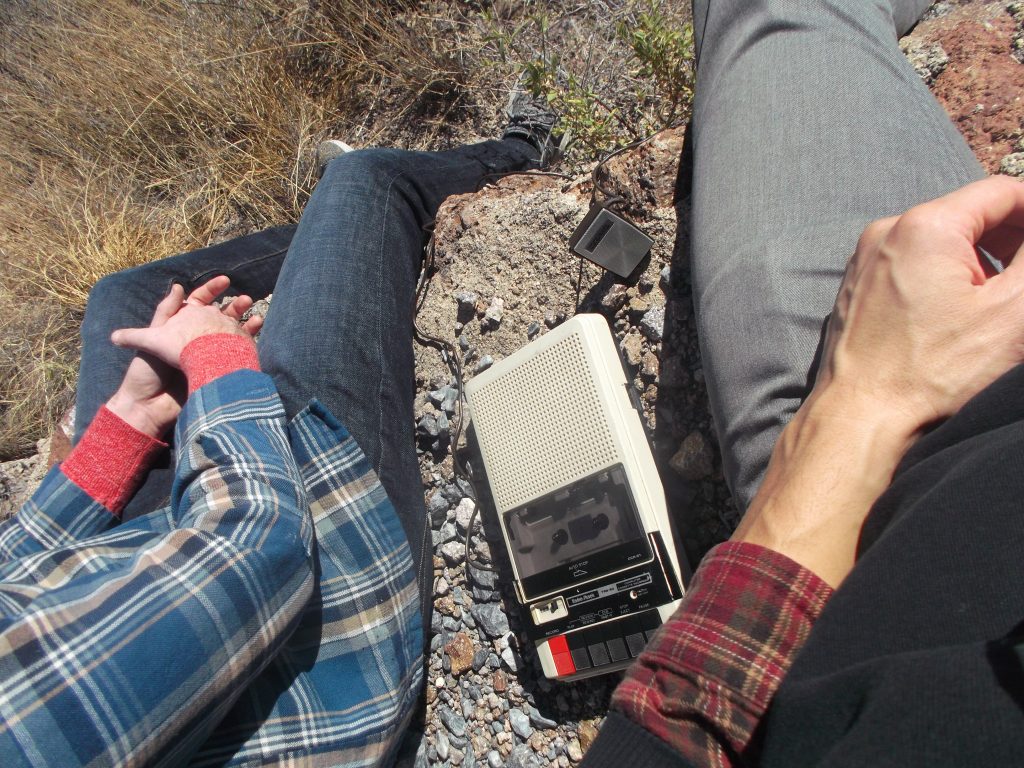
Tim Johnson (L) and Mark So (R) before a recording-reading period of readings 54, Pinto Canyon, TX, December 11, 2016
readings 54 (L: taped archive after April 2016; R: after February 2017)
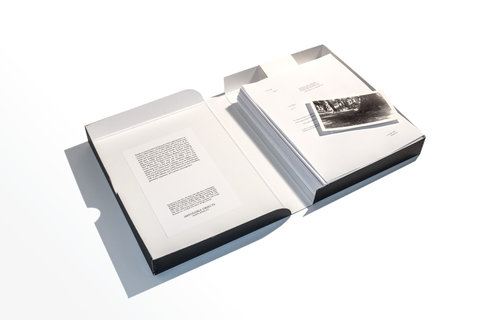
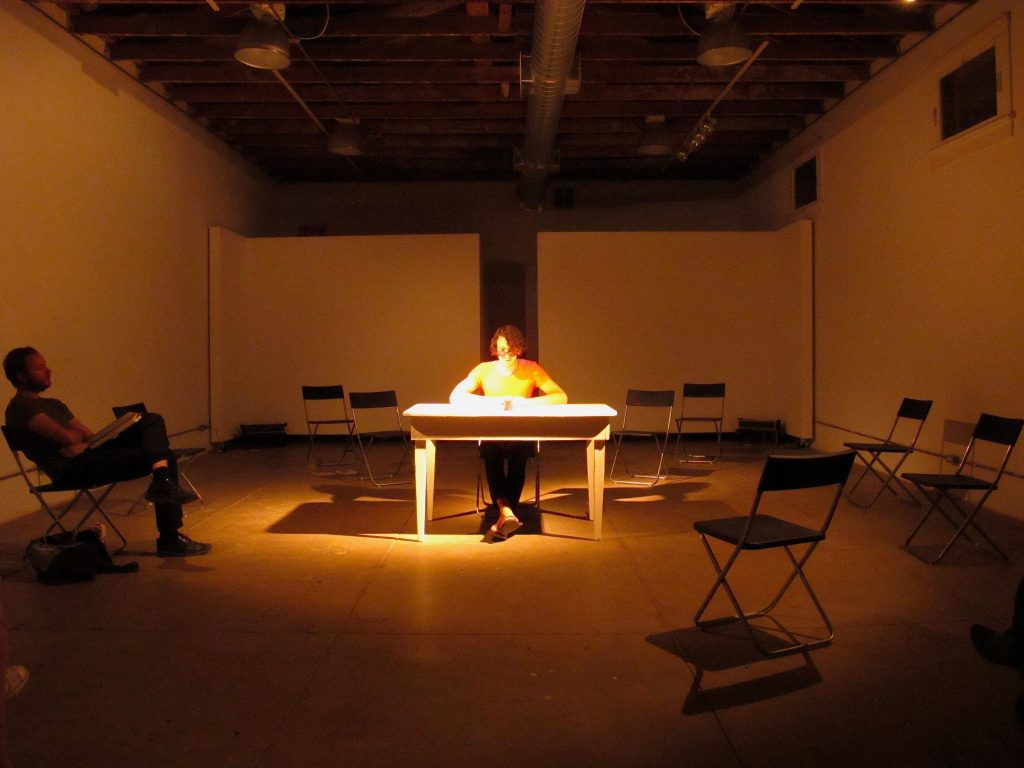
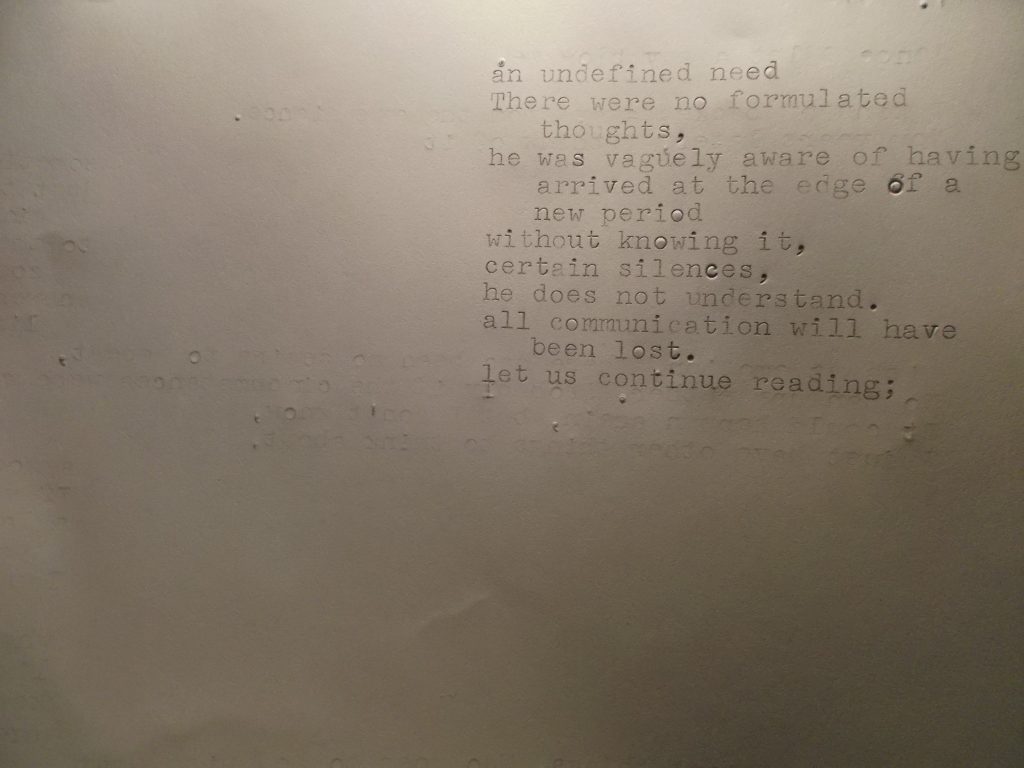
typed document from (into silence) at MaRS Gallery, Los Angeles, March 4, 2017
This is an interview I did with Malcolm Goldstein by phone on September 8, 2016. He doesn’t have a website, but Sounding the Full Circle is a wonderful inroad to his musical thinking. It is freely available online through Frog Peak. You can find his scores at Frog Peak too, a works list at The Living Composers Project, and a large collection of papers and materials at NYU. I’m very happy to get a fuller picture of his musical experience and thought through this interview, too.
First of all, could you talk about a couple of your either earliest or just most meaningful encounters with experimental music, or however you want to use the term. What drew you into it?
I don’t know what you know about me, so I’ll just say some things. So I’ve played violin since childhood, since I was about 8 or so. And then I went to Columbia College. It was 1952. I heard the Juilliard String Quartet play, at The New School downtown, all of the Beethoven string quartets, the whole series. And although I was supposed to go to medical school, I decided, no, this sounds wonderful. That’s what I’d like to do. So I took all the medical school classes, but then my last year, actually, I was working up at Tanglewood. So Aaron Copland, through Douglas Moore, got me a young composer who then taught me about harmony using the horrible book by Piston. Yeah, it’s a very terrible book. And that was my introduction, because as a violinist, I didn’t know anything about any of these things. And also, while I was going to school, I joined the interracial chorus with Harold Aks, so worked on being able to sing music and sight-read. And so I was doing this while I was doing the pre-medical stuff. And then my last year of college, I took all the music classes there were simultaneously, because I’d already done a certain amount of harmony, and the counterpoint and all the history and orchestration, everything, conducting, everything, and composing. But in the composition class, by that time, I knew about music being different than Beethoven. I mean, I think I told you I worked in the music library, and so I came across the materials of Ives and Varèse and Boulez and everybody, because they were not discussed, actually, in the classes at Columbia. So my first attempts at composition, in I think it was my last year of college, were pretty mundane, through-composed, all the notes pieces, with influences by various people, fairly conservative. And then in graduate school, by then I had learned much more.
Even with John Cage, I didn’t go to his retrospective concert, because I was against him. I roomed with a fellow who wanted to be an opera conductor, and he had put down Jackson Pollack, saying, well, you know, he does whatever he wants. There’s nothing. It’s just all absurd. And I liked Pollack’s work and I’d seen it. On the other hand, I didn’t know Cage’s music, and so I never went to the, what was it, 1959, the retrospective? I can’t remember, in the town hall. I didn’t go there, because not having heard once single sound, I was against it. This is typical. That’s why I can sympathize with people who don’t like contemporary music, not having heard it, because I can understand that. So yeah, it makes perfect sense, right?
But in my graduate school classes, that was late 50s, that Philip Corner had come back. He was in one of my composition classes with Otto Luening. And so that was wonderful, and we both liked Varèse’s music. And so that was my background. And I was doing some electronic music, a little bit, because one of my jobs was working at the Columbia-Princeton Electronic Music Studio, working with composers. So I did something that involved through-composed music, for a singer to sing from the Lamentations of Jeremiah with electronic sounds, and the dancers did their dance. So that was my background. You know, you learn all the notes. You learned how to read scores and all that kind of stuff. And also wonderful in going to graduate school is that I was introduced to Guillaume de Machaut and isorhythm and all kinds of stuff that I didn’t know much about. And I loved Machaut’s music, and a lot of the 14th century motets. And so even though I was not interested in it, it opened up wonderful new experiences. So then in the early 60s, Philip was back in New York, and he invited me and the woman I was married to then, Arlene Rothlein (she was a dancer) to a concert, the dance students’ first performance. We went, and we said, wow, this is great. And from there on, everything changed.
You’d heard it.
Yeah. Well, I still did some through-composed pieces, because Max Polikoff had his series called, I think Music in Our Time, or something like that, at the 92nd Street Y, and so I still did some through-composed pieces, but did electronic music for Arlene Rothlein, and worked with the dancers, and started improvising. This was the early 60s. And from there on, that was the end of the old music. I mean, I still love Machaut and I still love Beethoven, but composing that way and thinking that way, I realized that’s another culture, another time.
And so a first graphic score was Illuminations from Fantastic Gardens, which was for Elaine Summers, the choreographer, put together a whole multimedia event in 64. So I did the Illuminations piece there. It’s graphic notation of a text of Rimbaud, Illuminations. And that just changed my life. I was improvising. That’s when I began improvising with the violin, and dancing like in Yvonne Rainer’s dances, and other people. And I remember the first time a dancer said to me, can you just play something and move around the room? I said, play what? I expected him to say Bach or something. He said, whatever you want. So I stuck my neck out and began improvising. And that was a dangerous beginning. I don’t know when, but somewhere in the early 60s, could be 62, 63, I don’t know. And I did a whole program for Varèse when he died. I think that was 65, where I wrote some music for— This was, again, at Judson, but had nothing to do with the dance theater. It was a structured improvisation piece for organ, automobile horns, and piano. The piano part, it was pretty fun, and incorporated some of Varèse’s music, as well as sound masses. And Elaine Summers projected visual images during the performance of Varèse’s Poème électronique. So we did that with his music, and I conducted an ensemble singing part of the mass of Guillaume de Machaut. So everything changed. From the early 60s on, it was all open. And then from somewhere around 64 on, I pretty much ended with notes, through-composed music, and I explored all kinds of different notations, graphic and verbal and mixing in old notation with calligraphic things. So that’s where it all began.
It’s wonderful to hear how it all came together to start. It seems like a lot of what you’ve done—the calligraphy, interest in environment and place—has aspects of multidisciplinary, or aspects that get outside of music as music for itself. It seems like that might have been part of what appealed to you in going to these things with the visual elements.
The wonderful thing with Judson was that, first of all, there was no free improvisation, so-called free. I call it open now. Okay, let’s go back a step. Judson was a collaboration of all the arts, of dancers, musicians, poets, visual artists, anything else you can think of. And it was a collaboration in which there was no leader. It was completely without hierarchy. Anybody could do anything, which meant then some people did completely through-composed dances which they worked out beforehand. But there were a lot of structured improvisation dances. Yvonne’s dance that I was in was like, we run, or we all run. It was just moving around the space and doing different gestures that I was involved with.
And the important thing for me also, besides improvisation, is that working with dancers so intensively made me aware I had a body. And that sounds simplistic. But as a trained musician, we never talk about that. We just talk about techniques and how to do something, but now the whole body is integrated into the sound. And the sound, as I say all the time now, the sound is integral with the movement. So you can only make one kind of sound with one kind of movement. And this all came from working with dancers, and how we breathe, how our breath has to do with sound. So we learned about phrasing traditionally, but we don’t really learn about breathing, and how much energy is implicit in a certain movement with a certain sound. This goes back to Varèse also. Everything I’m saying was said by different people in different ways. Like Varèse said, sound is a physical phenomenon. And that is very, very clear. But before that, I just played the violin as a violinist learning techniques and playing the music. Now I’ve been playing Bach, memorizing the music, and that has changed it fantastically, and I play it like nobody else. And also, in the repeats, I improvise, and I tell people, like the first movement of the G minor and the A minor are written out improvisations. There’s really no theme. It’s just the guide. He was a great improviser. It’s all a totality. So it’s not just me. I was and still am learning from everybody, and then integrate it within myself, and then it comes out my way. So Judson was one thing, and at the same time, with Jim Tenney and Philip Corner, we started Tone Roads. And at the beginning, we did all the great masters, like Ives and Cage. By then, I’d overcome my thing with Cage. I met Cage, and I realized he was just a human being who did his kind of music. And so Cage and Feldman. And so we did all the masters, and then after two or three concerts, we started to incorporate not only our music, but also other young composers. So music then wasn’t just, as with Judson, a theoretical thing on a score page, but had to do with enactment, with a performance, a putting into sound. And so both of those two experiences were very important for me as a source.
That sounds crucial. And this may be a tough question to get at simply, but I’ll ask it anyway and see where it goes. It’s two questions that are hand in hand. What is it that’s compelling to you about experimental music, and how does it connect with your experience in a more broad way?
Well, I don’t use the word experimental.
Whatever word you want to use, but this area.
No no, it’s a good word, because it’s related to the word experience. If you start digging into it, it’s related to the word experience. So it has to do with experience. Your book is wonderful, because you talk about people approaching it scientifically, and I love Jim Tenney’s music. But Jim, it’s like talking about the New York School is absurd, because there are four different personalities involved there who think and wrote completely differently. So also with Jim and Philip and myself, the same way. We are three different people, and I guess I’m more similar to Philip. But they’re both wonderful composers. But for me, the theoretical side of music does not interest me. It’s not that it’s not important for other people, but for me, it’s an enactment, making it into an act, making it into a giving. It has to do with people. It has to do with relationships. It has to do with the moment sounding.
Another important experience for me was later in the mid 60s, we bought land in Vermont, and then we built a cabin and a house. So by 70 or so, we were living there. So the sounds of the environment were very important for me. Oh, this brings back a memory too. Yeah, I remember with Varèse talking about sound and Cage talking about sound. So in the subways, subways can be horrific in terms of impact upon the ears. And children will generally put their fingers in their ears, and businessmen will keep reading their newspapers. So I gave myself the experiment—I wrote about it in some journal somewhere—about actually listening to the sounds of the subway. And everything was fine until the subway made this way place where it really makes a sharp turn going into Brooklyn. That sound really hurt me. So the environment both in New York, but even more so in Vermont, where you have sound coming through space, which then relates to Charles Ives. And multiple sounds going on. That’s what got me into The Seasons: Vermont, multiple sounds going on in different spaces. And so it’s not a question of soft, because something far away can sound soft, but has a different presence than a sound which is close and you’re playing it soft. And just the opposite with loud. So Vermont was an important experience to me too. We moved out of the concert hall. Well I had done that before also, but now just living there, it’s like day and night, really experiencing sound in space, was very, very important to me, too.
So going back to your question, with experimental. I’ll quote one of my favorite writers, Chuang Tzu, who says, jump into the boundless like the unknown and make it your home. Well, he’s talking about life. So I say, yeah, the first part of it is wonderful. It’s the best definition of improvisation I could think of. But for living, it’s very hard. So the word experimental, then, comes down to really opening up the boundaries. What are the confinements of what is a through-composed piece? By that I mean, if you think of all the music you know except so-called experimental, it’s a linear piece that goes from somewhere, does something, and ends. And this is even in many cultures too, folk music. But there is an entrance into an experiencing of and either some sort of ending or some sort of resolution. But so-called experimental music, we don’t have to do that. And there are an infinite number of formats, like an open field format, a format which is more spiral, which opens up into other spaces, cyclic fields. There are many, many different formats or structures, whichever word you want to use, which are not linear. And that’s what I have gotten into, because, going back to Chuang Tzu, experimental then relates to my life, not just to writing a piece of music. I’m not against— Most of Jim Tenney’s music is linear, and it’s through-composed. Most of it, not all of it. And it’s still wonderful music, and I still love Bach and Beethoven and others, Messiaen, Ives, Bartok. But that’s another way of thinking. So this experimental then relates more to our living, even like collage constructions. All this is, that’s the way I think. That’s the way I talk. As you can see, I’m rambling around from thing to thing.
That makes a lot of sense to me.
Yes. It’s all within a certain field, but it’s not— You know, you walk in, say, a farm field or an open field anywhere, and there’s no path to tell you which way to go and which way to get out. You can walk around it in many, many different ways. And that’s I guess what I would call experimental. You’re experiencing the whole thing while you’re passing through it as a living experience, rather than being told, like New York City, it’s a grid. If you try to turn a certain place, you’re going to bang into a building. So that’s why experimental is important to me, and it also, with my composition, it invites the musicians to participate in it. So that to me, music is a social phenomenon, as you probably read in my book, and the important thing is not the music, but it’s people in an experience called music—or some people don’t call it music. And it’s that participation. Everyone in my pieces, they open up dimensions and enrich the piece beyond anything I would have thought of if I just wanted to control the whole piece. So by giving up control, I actually receive a lot. Before, I just thought I was doing something, and maybe especially when I was 20, I thought it was great. I don’t know. You thought you were writing a masterpiece. But now it’s more— I’ll send you this recording that just came out around March called Soweto Stomp. And it has a piece in there called In Search of Tone Roads, No. 2, for Charles Ives. I work with a group up here. I’ll send it to you. I actually say this in the program notes, that like that piece, In Search of Tone Roads, No. 2, at first, I did more like an Earle Brown kind of thing, where you cue in different—of the 15 or so people, I would cue in two people to do this or whatever, and then ask not to do that or whatever. There were different kinds of material. And it was nice. It was a good performance. But then, a year later, we did it, and I said to the person who organized the group, it’s absurd. They know the music, so I’m not going to conduct. I’m going to play the violin. They’re going to cue in each other. They were in subgroups out of the 15. It was fantastic. Much better than I ever could have done. That’s what’s on the recording now. So that’s another important dimension to me about experimental, is that I guess life includes people, yeah? So people are important, and the experience as a living phenomenon, rather than as a controlled, directed composition, those are very important to me.
Is there a term that you use for it other than experimental? I wonder if something like experiential— I’ve been tempted to use a term like that myself. Is there another term that you’ve come up with?
No, I don’t call it anything. Sometimes people say, okay, Malcolm Goldstein, the avant-garde composer. I say, no no, I never use that word. I ask them, do you know what that word means? And they say, no. I said, that’s a military term. I’m not supportive of the military. I’m not the avant-garde. And on top of that, I tell them, I don’t know of any composer who called themself avant-garde. Now many some call themselves experimental, but I don’t know. But I don’t say anything. I just say it’s hard to say what I’m doing. To me, the whole world is music, and so if you listen to the sound of wind through different kinds of trees, that’s making a certain kind of music. And the way a brook sounds. That’s why I have that little prose poem about the rain pouring through rocks. I can’t remember where it is. Rocks and trees and grass. The brook, for me, well, Bach’s name means the brook. And by that I mean, with Heraclitus, that the brook does not exist. It is a process, and it is continually changing. It is never repeating itself. It’s improvising without even trying to do anything. And that’s what I believe is the way of improvisation, which is, you’re not trying to do anything. You’re just playing. And it’s all a process of discovery, and it’s like Heraclitus says. You can step in the brook once, but really, you can’t even step in it once. And that’s what my open improvisations are like. So I don’t call them free improvisations. I don’t call it experimental music. I just draw the analogy to the world around us. It’s like listening to the wind through trees. Because people don’t listen to the wind through trees.
There’s a piece by Peter Ablinger. I think I might have written about it, where it’s recordings of the wind going through different types of trees. It’s really beautiful, and they’re so different. You can tell immediately when it switches.
Yeah. Well it’s actually embedded into, I think it’s The Seasons: Autumn. But it’s not focusing on that. It’s just all the sounds are autumn. So I think we have that in Autumn. I can’t remember. I do it, but it’s more embedded. It’s not just a singular focus on that. So that’s the best way I can do with people, is just draw attention to what they haven’t been listening to, which is the whole world of sound that they’ve been living in. And I say, well that’s what my music is kind of like. It’s noise and tonal things, and everything.
That leads well into the next question, especially what you talked about with improvisation. Most people I know within this field tend to do more than one type of thing within it, whether it’s composition, performance, improvisation, teaching, writing. I think you’ve done most of these things.
Yeah.
What are the main roles you’ve taken on, and how do you find that they complement each other?
Well again, okay, let’s go back to Bach. My ideal is Bach. To be a musician, you did everything. You didn’t just play the violin. You played the keyboard. You conducted. You composed. You sang. Everything. I don’t think he wrote about music, but— And what I’m getting at is that that’s a complete person. That’s a complete person who calls himself a musician. So it’s a complete musician. What we’ve done is made people into factory workers where they have a set job. That’s fine if they want to live like that. I don’t enjoy living like that, so to me, all these things affect each other. To me, composing is completely different than open improvisations. When I say open, it means it has, most people use the word free, but I don’t think there’s any such thing as free, because I’m always going to be Malcolm, and I’m always going to be, as soon as I begin, they’ll say, oh, that sounds like Malcolm. It’s not that I’m trying to imitate myself. It’s just that there’s an area of music, of sounding, which is that openness, I guess, of all qualities of sound. And it’s also, it’s more like a brook. I’m not starting off with a theme and then expressing it or showing how many variations, or how I can manipulate it or something. No, it’s very much like a brook, and that’s my way of improvising. And so everything is integral. So when I write, I usually write because people ask me to write. And actually, my book wasn’t a book. A friend said, oh, you have all this stuff. I’d been asked to write about all these different things, and things since then also. They said, why don’t you just put it into a book? And that’s how it came about.
It’s a beautiful book. I love it.
Yeah, I’m happy with it, and other people, I think, have been touched by it. Now, I’m writing about the Ives second string quartet like nobody else. I’ve worked on it for 15 years, and I have to call up the publisher and again push him, when are we going to get it out? [It is now published.] I did the edition of the second quartet. And I know so much about the history of it, about the structure of it, everything about it. I’ll tell you, there’s one spot in it. I’m sure you won’t be able to get it, because nobody can. There’s one spot where the cello says con con Conny Mack. Do you know what he’s referring to?
No.
Conny Mack, well, this is in the “Arguments” movement, and they’re having an intense argument, and the first violin says, “I say, I say, I say,” and Con, Connie Mac says, “I say,” and then at the final part of it, badeda, badeda. It’s a baseball game. When I was a child, I used to have a baseball signed by all the Philadelphia athletics, and Conny Mack is the owner and the manager. But in Ives’ time, he was the player. And so nobody, no musician, nobody knows this. So I’m just joking. This is a very miniscule thing. But it’s so fun, because what is not miniscule but very important is, how do you play this passage? Why does it have a glissando going down at the end? He’s sliding into home base. He’s running from first base to second base to third base, and he got a home run. So it’s also a baseball game argument. So to see the humor in it, because people play that quartet like it’s a Brahms string quartet, and it’s not. It’s a wild, crazy way of thinking of relationships of four people. Ives says this in his own description of the piece. Four men who get together and discuss and everything. And there’s no continuous melodic line. It’s sometimes every measure or every couple of measures, a change of focus and a change of relationship of parts. It’s mindblowing. It’s a fantastic, great piece. So I start talking about Ives, you have to be careful. Your question was about—
Just taking on different roles, and how they complement each other. But that editing work too—
Yeah, so my writing about things in the book, and that then clarify things for me, which then might open up things even musically thinking, when I’m composing, which are all now just structured improvisation compositions, and also definitely when I teach. So to give people an improvisation framework, where they work on it in the workshop, of changing what they’re doing and changing relationships of the players, pretty much on the spot. There’s another kind of structure which I enjoy, which is the haiku structure is 5-7-5 syllables. Not that you do that literally, but the basic conceptual structure is an entrance into something, a development of something, and then a letting go and finding something. So it’s like, “such silence / the sounds of the cicadas / sink into the rocks.” That’s fantastic. Who would think about sound sinking into the rocks? So the structure opens up. So that’s another structure I work with people, where you use your musical training, not 5-7-5, but within maybe 15 seconds, you take a material that you start with, and then as a musician, you develop it, whatever you want, and then you just let go and see what comes out. And then we make relationships with someone else. The other person can pick up some aspect of that, just like the haiku people did back in, many years, 700, 800, where they’d sit around in circles and get drunk and pick up on each other and make these renga cycles. That’s a nice interplay, also. It’s like a telephone game kind of thing. So my reading about the world, about different literatures, my writing about it, my teaching, my playing, playing with different people, my talking to you. I’ve said some of this stuff before to different people, but then it comes out different talking to you. It makes me think about it. I’m going to give a workshop on improvisation, hopefully, if people sign up for it in January. And so it’s like a whirlpool of living in which you dip into different aspects as needed at that time.
What’s the workshop you’re doing in January?
I’ve tried this before and nobody signed up. I did something, this will be the fourth year. The first year, it was free. People just came in, and they could leave money if they wanted to. There’s a place here called Casa del Popolo. So the Sunday afternoon, the first year, I did talks about 20th century music, and played examples. And then the second year, I played, a year ago, a whole series of five concerts of all kinds of music from the 20th century, Stefan Wolpe, Cage, Corner, Oliveros, everybody, and Jackson Mac Low. And then the last year, we explored different pieces by, say, Alison Knowles and John Cage and Jackson Mac Low, where they actually did it. That was mostly nonmusicians, it turned out. This year, it will be for musicians. Now the problem up here is very simple, and that is that there’s a very lively new music scene, but excuse the expression from an old man. They’re all young people, and they think they know how to do everything, which means they have built up their techniques and they can show off their techniques, but they haven’t dipped into the unknown of improvisation. And so they don’t come to these things. They don’t come to study or anything. But I’ll try again, because someone suggested it to me. That’s the frustration in my age, is that I’ve been doing this for 60 years, and I can still play just like I’ve always played, but I’d like to share it with people, and it’s just hard, because, well, at least up here, they think they know how to do it, and they don’t have to come to me. But I felt the same with Varèse. I can understand that too. When I worked at the Columbia-Princeton Electronic Studio, he came in. He was still working on the electronic, to improve the electronic portions of Déserts. And so for a couple of sessions or so, I worked with him, and I thought, oh, I’d like to study with him. I was still then, that was the late 50s, so maybe I was 23 or something. I can’t remember. It doesn’t matter. But I felt a similar way. I don’t want to impose upon him, you know. He’s working on all his great music. And so I didn’t study with him. But he was wonderful. Yeah, so no, I’ll try. I don’t give up.
Good. I think sometimes people don’t realize what they don’t know, and what experiences are available to them. Trying to make that a little more evident can be challenging.
Yeah. It’s just very simple. I generally won’t play with them, because there’s no pleasure, because they don’t know how to listen. They’re so busy— You know, I agree completely with Cage about, this is not a question of demonstrating anything. It’s not that you have any intentions. If you have any of that, then you’re thinking. And I know I work with improvisation differently than almost everybody that I know of, which is, it’s totally mindless. You’re totally in the brook, and it is just going, and you just play. But Cage said, anything is possible, starting with nothing, which is impossible. And I say, anybody can improvise, as long as you spend your life doing it. So these are people like, they’ve been doing it for a few years. They come out of the school and they’re playing. So at some point, maybe they’ll get bored with their repetitions or whatever. I don’t know. So there’s no fun playing with them, because— I mean, there are some people I play with. But they don’t listen. If you don’t listen, it’s like you don’t hear the world you’re living in. You don’t hear the sounds other people are making. I know I’m doing all the talking now, but talking is really a conversation. So it’s like if I’m talking to you, and you put down the receiver and you went in the other room and I was talking to myself. It’s not a nice feeling.
No, it’s really not. And there are some times you can get in these conversations where you feel like you might as well do that, but this is definitely not one of them. You’ve mentioned a couple of these already, but what the groups or communities are that you’ve felt most a part of within your musical life. There’s Tone Roads and the Judson, it sounds like. But are there others that you would add to that, whether they’re formal or informal?
Those are my roots. Yeah, those are my roots. And then, like I’ve worked a lot with Matthias Kaul, with his l’Art pour l’art ensemble in Germany. He’s wonderful and the group is wonderful. Then playing with people in different situations or working with different ensembles, like the, it’s called the Ratchet Orchestra that put together this, it’s on Mode Records. But I’ll mail it to you. Interaction with people is what always changes us, especially if we’re not busy telling them what to do. So I would say, my roots are those, I would say three things. That is, Judson and Tone Roads and Vermont. And then from there on, it’s open. Like in Vermont, I did for many years potluck performances, that anybody could come and do anything. It was great. And my favorite critic is Raymond, who’s dead now. He was a farmer. And he was asking me about my improvisations. He said, hey, Malcolm, what kind of music you call that? I said, I don’t know. Here’s my answer I just gave you. I don’t know, Raymond. It’s just my kind of music. Yeah, it’s interesting. It’s really interesting. This is a guy who, Beethoven is, or Bach, or anything, is like new music. So it’s like—
Really?
Oh yeah. Some people haven’t heard anything. And I’ve built up a fan club. Tobias Hume, do you know his music? Oh, he’s great. Tobias Hume. He’s from Elizabethan times, around 1600. So I’ve made transcriptions of his lyra viol music, and I played that a lot for them also. They’ve heard everything. They’ve heard Cage. They’ve heard Christian Wolff. They’ve heard Bartok. They’ve heard Bach. No, I’m sorry, not Bartok. No, I can’t play that sonata. Wolpe, I mean, everything, Corner, open improvisations. I had some jazz musicians come down from Montreal. They played in the town. This is in the town hall in Sheffield, Vermont, where my land is. And the Bozzini Quartet came down. They might have played the Ives Quartet. I’m not sure. But they played, I’m sure some Beethoven. Yeah, I think they did the Ives Quartet. So these are people, some of them are college teachers in the audience. Some are farmers. Bread and Puppet Theater is nearby, so sometimes they came by, occasionally, and performed, or sometimes came by and listened, or sometimes danced. There’s a community up in Vermont, Mad Brook, where Simone Forti was for a while. Steve Paxton lives there. And Simone came over and performed. They’ve heard all kinds of stuff. It was wonderful. I feel that Vermont has given me so much. Now that I don’t have a car, I have to figure out how I’m going to keep going there. After 23 years, my car died, and I don’t have money to buy another one. It was a used car then, and I’m not sure what— These are other situations as you get older. Yeah, so Vermont has given me so much. And just meeting people like Raymond and other people, and how people are different up in a world like that than in the cities, for better and for worse. Some do some horrible things, and politics, and some wonderful things. So it’s been very, very invaluable to me.
I had my second aneurysm operation about five years ago, and I couldn’t get out much. But a whole piece, a piece as a whole, that very often comes to me, and it’s more complicated to figure out how to notate it. So this piece is called on and on and always slowly nowhere. I was also reading a lot of Beckett, too. And I just invited people to come to my house. So it would be a concert for one person or for two people if they were a couple, and I would play this, it’s about a 15-minute piece, and I did that for many people. They just came to my house, and I just gave them a little concert. This so-called business called music is for me a matter of sharing experiences and sound among us. So that was one. I’ll do it in New York when I am going down there, at Roulette, and I just did it. Actually, a friend of mine just had his 60th birthday, and I was invited to play at his party. So I played three pieces, including that, and there were about ten people there. It was just in someone’s house. And I said, you know, I’m going to do this in New York at Roulette, and I don’t know how many people are going to be there, because it’s meant to be for an intimate audience. And then if it’s not a lot of people, the space will probably be big. So someone suggested, well, look. No, it’s also just seeing you stand there, and the way— Because there are three sections. One, I’m just playing a continuous bow-stroke for a long time. Let’s just take one note and just, ahhh, it goes on. It could go on for three minutes. It could go on for ten years. And then there’s a middle section where I make a repeated sound-gesture. I make a sound and repeat it, so the gesture. And then I sing a little bit, and then it goes back to a different sustained sound. So I realized, because I never thought about this, going back to your question about writing and interaction with people and everything. This person who was at the party said, no, no, it’ll be great. Because just the physicality of that person standing with such concentration drawing a bow, and then you hear, well, in a small situation, you hear that the sound is endlessly changing. But even if you don’t, if it’s a large hall— I don’t know what will happen. We’ll find out. The presence of standing still like that and just bowing a continuous bowstroke back and forth, and then breaking and going to a very clear gestural thing, and then going back to— He said, visually, that’s a piece in itself. So that helped me, because I’m going to do it.
That goes back to your experience of dance.
Yeah, exactly.
Realizing there’s a body.
Yeah, you’ve never seen me perform, but people say it’s like dance. So it’s like, I cannot stand, I won’t name some string quartets, where they play like they are sticks. And no, you have to breathe. Music is breathing, and you have to, not show off, not big, flamboyant motions, but motions which grow out of a gesture which is related to a sound. Yeah, so people when they see me, they say, it’s like dance. Dance is music too. When you see a dancer, a lot of dancers think in terms of rhythm structures and energy structures. Dance and music are very, very closely related. It’s harder to be a writer for me, because I’m sitting at a desk alone. It’s easier for me to talk. And painting is very much, not only, but action painting is quite different, where you can have an audience. But most painters paint by themselves. For me, this is one thing. We’re not getting into my personal life too much, that in these last few years is a big challenge to me, because I’m basically, even though I have friends here and there are some activities, it’s basically alone, whereas for me, I wrote my first article in the book because of New Music America. Pauline [Oliveros] asked me to write something, and it’s that “improvisation, people making music.” And I thought that was true for everybody. I found out it’s not true for everybody. It’s true for only a small number of people. For most people, they think of it as their piece of music or their, they built up a sort of style of improvisation that is theirs, and things like that. No, for me it’s people. So right now we’re at the end, where I’ve stopped touring in Europe, and my activities are more limited. So the lack of interaction with people is something I have to learn about. I have to learn how to incorporate or transcend. I’ll tell you a few years from now what happened.
There may be some other solutions you find, too. There may be some ways.
Yeah, I’m doing different things. I’m exploring many different things. That’s what it comes down to. Not just music.
That again leads perfectly into the next question. And I have some sense of it from your previous answers, but what you’re working on right now in any capacity, what you’re doing. I gather you’re preparing the Roulette concert coming up.
Yeah. Well I’m just going to play older pieces there. And I always play one improv. The open improvisations are called Soundings, so I always include that. And then it’ll include other pieces, like the one I just mentioned, on and on and always slowly nowhere, and other pieces. And then after I go down to Baltimore, there’s a whole week of concerts focusing on music from the 60s and maybe into the 70s, and I’ll have a solo program, and I’ll play other people’s pieces at the University of Maryland in Baltimore County. And that’s essentially almost my whole season right there. So what else am I doing? Well, there’s this concert here in two weeks with this new music ensemble, which is, they don’t improvise at all. So that’s been a challenge, because I want them to enjoy it. And so in a strange way, it’s a through-composed piece, not with notes, but with what activities they do at certain times. And then I give them different kinds of notations to show them what to do at that time. And they have to listen to each other to take cues from each other. So there are elements of improvisation. But they cannot openly improvise. I don’t want to frighten them. But I had some rehearsals with them. It’ll be fine.
What’s that piece called?
I make strange titles. What is it called? That Which Goes On.
That’s a good title. I don’t think that’s strange. I think it’s lovely.
I like it too. Well it’s something to think about. Yeah, there’s a piece I did for a new music group in Vienna. It’s called the Klangforum Wien. So it was very interesting working with people who were openly antagonistic, and some people were trying. And that piece was called something like, “What can be said of our differences?” They played it, and they did well. And then they did it again in Cologne. I would break them down to small groups, and that was left pretty open, again. I didn’t tell them what to do, but I had five days to work with them. But different individuals, like the pianist, he would bang on the piano with a big cluster with his elbow. And I don’t fight with people. I just say, well excuse me, where do you see that in the score? Oh, I’m sorry, Herr Goldstein. Anyway. And then before we literally walked onto the stage before the premiere, he said, ah, Herr Goldstein, it’s not free improvisation. I said, that’s right. It’s not free improvisation, it’s structured improvisation. And then I remember a horn player. They’re supposed to do a certain activity where they stretch something as far as they can. But that’s the peak of something. And this horn player, he kept going to the same thing over and over and over. And I said, what are you doing? He said, I’m trying to get it to be higher and softer. I said, no no no no. Just go to where it’s comfortable, and that ends it. You’ve shown that you have gone there. But he wasn’t being nasty.
It was a misunderstanding.
Yeah. It was a new experience for them. And it came off quite well, and Cologne, I think, was very beautiful. But it was a new music ensemble. All these ensembles, they can play circles around me when it comes to written notes. They can all play the most complicated note music that I’d have to practice, they can almost sight read it. But when it comes to listening and making choices, I think they learned a lot, but I don’t think that group, Klangforum Wien, will do it again. So I enjoy working with people a lot, or even playing my music. You say these things in your book. It shares with them other dimensions of music and of living, by how they experience their making the music in a certain community of other musicians, or people or dancers or whatever. And that’s very important to me. Actually, everything I’m saying is in your book.
You’ve got this rich experience that you bring to it. I feel like I’m just kind of opening it up, and you’ve got a lot that you relate it to from things you’ve done.
Yeah, but you have it all in your words. The book says it all.
What work or topics are you most excited about these days? I think a lot’s come through already.
I’ll tell you, right now, I’m trying to learn who I am at this time in my life.
That sounds like a good thing to be doing.
Yeah. It’s like, most people who work 9 to 5, they retire at 65. I did one more tour with a dancer up here in Europe in 2014, but had pretty much stopped touring in Europe about five years ago, and then also, certain surgery operations and various things, and my car ending, and things like that. And also, last year, after a series of five concerts, I developed pain in my neck and shoulders, which I never had before. I learned that a disk in my neck is worn down, which happens to older people. But I don’t play rigidly, so I’m sure being a violinist has something to do with it; but I’ve overcome that now, so I can play again.
Good.
Yeah, oh yeah. There was a friend of mine, a clarinet player, who developed something where he can’t play the clarinet, and he was at the party. And he said the same thing. And I didn’t play the violin for about three months. So it’s all these things. It’s like my being a musician, well, to put it another way is, I had to learn that I’m not a musician, not just a musician who happens to be a person. I’m a person who happens to be a musician. This, I had to arrive at, and it’s essential. To go to another step, I was just sitting in the park the other day, looking at people. Oh, their muscles are gigantic, and the young men and women, they’re doing all these calisthenics and running and everything. And looking at it, I said, and it’s all meaningless. It means nothing. And also, playing the violin, and music, it’s all meaningless. I don’t mean that in a negative way. What I mean is, when I said I’m a violinist who happens to be a person, the important thing is that I’m a person who happened to define myself, who gave myself meaning as a composer of everything, a violinist, composer, and all that. And it’s only because I’ve given myself that meaning. It sounds very simple, but it just dawned on me sitting in the park two days ago. All these things I’m having to go through now are really an integration. It’s what I’ve always said about music, but I’m still going back to Chuang Tzu and trying to apply it. His book of writing are fantastic. So I’m now forced to integrate this into my life. Because the first part, about jumping into the unknown is like, that’s improvisation. That’s great. Maybe he got it exactly right. The second part, making my home, I’m sorry, that’s too difficult. So now I’m in a process, which is difficult, of integrating the whole thing into trying to apply that to my living, and not as a musician primarily, but as a person who makes music. And that’s a different way of thinking. So music is basically meaningless. It’s meaningful because we say it’s meaningful, and it is meaningful. But it’s also not meaningful. Like you have these people doing their calisthenics. No. I mean, like what I’m doing is like, you’re not going to make money with that. So what are you just making all these noises for? It doesn’t make sense. Get a job, and keep your body in good shape, and blah blah blah. These are all people 40 years old, by the way. So this is what I’m going through now. So projects, the project is learning about living at this time of my life.
That sounds like a very rich project.
Oh, it is! Yeah. And when I become this, I might even become enlightened.
It sounds like, in an interesting way, it’s sort of an extension of that realization that you had a body as a musician. It’s like you have a personhood as a musician too. It’s not just this separate thing off in the abstract.
That’s right.
But I don’t think it ever was for you.
This is the danger of society.
Everything gets compartmentalized into these separate units.
And our society encourages that. I mean, not only encourages that. In some cases it demands that. And people do jobs. Well, Thoreau said it. People live lives of quiet desperation. Sorry to say, it’s basically true that people will just do something— I mean, I played with people in orchestras in the 60s. I did the Ives Fourth Symphony with Stochowski. And all the string players around me hated the music. I would have to try to get through—
Really?
Oh, they hated it. Yeah. Because to them, the orchestra could play a Beethoven symphony without a conductor, no problem. But to play the Ives, they were against everything about it. And they didn’t see how it related to them as making robots of themselves to do a job well done, rather than finding out what is entailed in living and doing a so-called job. So I was only a 20-year-old something. I wasn’t going to convince them about Ives or anything.
You’ve got to pick your battles, I guess.
Well I’ll tell you, the most important thing to me in improvisation, when I give workshops, I give classes. Very simple. It’s just, trust yourself. This is essential. If I can teach— Not teach. You cannot teach anything. I’m sorry. You can give frameworks of experience in which people discover something. That’s what a workshop is about, for me. So I don’t teach them. I cannot teach them anything. I had a student in a workshop in Germany, and he came, and for his private session, he stood there with the violin raised and did nothing. I said, what’s wrong? He said, well I have this perfect idea. This is in an article I wrote called “Some Anecdotal Evidence.” It’s in one of the big journals on American music. It might even be the American Music Journal. I don’t know. And he stood there, and finally, I had to talk to him about life, and about— And I said, well, a tree. What do you think about a tree? He said, no no no. A tree isn’t perfect either. Like he had this perfect idea. A tree isn’t— I said, what do you mean? But it was perfectly clear. He was thinking Aristotle. A tree, like a maple. Everything— I didn’t say this to him. But he was thinking about perfect. So I said, think about a tree. Because I see this myself. I walk down the street and I say— I ask myself silly questions, like why does a tree grow like that? Well some reasons you can give, like it’s near a building, or the sun rises on this side, or there’s a wind. But no, it’s much more complicated than that. So a tree is really expressing its whole life. It’s improvising to live. And so by the time I reached the end of the hour, I was able, talking about trees, to get him just to play something, and it was wonderful. So to trust yourself is basically— Because if you can’t trust yourself, you can’t improvise, and if you can’t trust yourself, you can’t trust anybody else. Then you have a hard life. So I don’t teach anybody trust. I just try to give them situations where they say, oh, it’s all right. It’s even all right to fail, because there’s no such thing as failure, and there’s no such thing as perfection. These are all things that come out of cultural social things like religions and governments. And with me, my life is just doing whatever I can do, and I try to do as best as I can, but there’s no such thing as perfect. As a matter of fact, it’s better to so-called fail, because look, then—
Oh, this is a fun story. I read this somewhere. So this great master came over from Japan to the Greenwich House in New York, and he was a potter, and he put too much water into the clay. And instead of building out the clay, the whole thing just drooped over when it’s too wet. And he got all excited. Oh look, now I can do this and I can do that. And all the other ambassadors that came to see him, they were appalled. But he would say, oh, look, now I can do this and I— So this is what I mean about, there’s no such thing as failure. It’s improvisation. You learn by whatever is happening, and you discover, and you go through it to enact whatever is the process of improvisation. But it’s hard, because we usually want to have people applaud and tell us how great we are and things like that. That’s all very ephemeral. The trust in yourself is the essential thing.
I feel like that leads well into the next question as well. It’s like the brook knows where to go. But what do you think could be done to support this field, whether it’s on a local or a broader basis?
Just make music available. In other words, like there’s a guy up here in Montréal, has two million dollars, three million dollars, I don’t know. That’s probably how the Wandelweiser came. I don’t know. He’s angry at me because I told him the same thing that, what’s the name, William Parker said to him. You know William Parker? He’s a bass player, fantastic jazz bass player in New York City. And he’s black, so that makes it all right. So if I say the same thing, it’s not all right. So the organizer of the project is bringing in postgraduate people to study us and to discuss our stuff, and this and that, and never invited me, even though I’m here, never invited me to do music. I’m here. He’s invited other people, like Pauline [Oliveros], which I’m not against. I’m just saying that this is part of the game. And I told him, William Parker said the same thing. He was asked, what is the future of jazz? William said, even more blunt than I was, he said, look man. What you do is, you invite musicians. You pay them. You don’t pay these postgraduate students to come and just study us. You pay the musicians. And then you put on free concerts. That’s the future of jazz. So what I mean is, when I said, you asked me what to do? You make the music available. You convince, somehow, ensembles. Include one piece. Okay, you’re going to do Beethoven? Okay. Maybe even do a far out Bartok, or whatever. Just include, make a more full experience, rather than the usual formats that have been done in the past. And then I try by my, the way I do things. Like at this party, most people had never heard music like that, and they were open to new experience, and I hear they liked it. So yeah, Raymond, back in Vermont, he’s my favorite critic. After Raymond said that— It’s not like a graduate student says, yeah, it’s interesting. Raymond said it from the heart. And after that, no critic could touch me. They never touched me before, either. I got a “great” review of my— I did this violin concerto called Bachwasserfall, or Cascades of the Brook. So it’s based upon the first movement of Bach’s G Minor Sonata. It’s all collaged, all broken up with the musicians, and the orchestra played that. Lukas Foss did this at Bach’s 300th birthday. So I worked with them, and they did a beautiful job. And the one reviewer hated the piece, and she said, this was a butchering of Bach. And I said, oh, baby, you got it! You understand the piece completely, in my head, because it’s a collage. The whole thing is a collage. I had never met her, so I don’t know. But of course I couldn’t say it. But I thought that was a wonderful review.
Sometimes it’s better to get something specific than just, oh, it was interesting.
Right. Oh, that’s death. That’s the most, yeah.
One of the best is, you must be very proud.
Oh, that’s another one. It’s your baby. How old is your baby?
Is there a question that I haven’t asked? Something that you’d like to address or talk about?
I think I covered the whole world there.
Yeah, I think you did too.
I think it’s clear. I’ve said it, but it’s essential to me, and it goes back to the word trust, and it goes back to physicality, and it goes back to presence. It goes back to the space that you’re playing in. It goes back to the people who are there. And that is being present, as a process of discovery. Rather than saying something, you’re discovering something. And so for me, it’s much more enrichening, rather than saying the same thing over and over.
That’s a beautiful way to put it. And the only other thing left is, are there other people that you would suggest that I interview like this? I’m hoping to make this quite a big project. It’s been so interesting to hear what people have to say, because I feel like just these fundamental questions of, why does this matter to you? It’s something that nobody asked me, really, and I didn’t think to ask people until I got so deep into the book project. It’s like, what’s going on here? Why is this so necessary?
Well I think it’s clear in your first chapter, especially in the first part of the first chapter.
Yeah, the introductory section. I was trying to embed it there.
The focal thing, which is so important, is that we’re dealing with a more open, experiential situation, rather than a defined, I have something to tell you, or in a grandiose manner kind of a mentality. So you say it very clearly, and I think it’s important and very wonderful, because your writing is very clear. And I ramble.
No, I think your speaking is very clear too. I try to just keep the language plain. And I was criticized for that by some people, that the language seemed too simple. And I thought, well, in a way the ideas are simple, but they’re not customary ideas for people, so why not present it as clearly as possible?
The most important thing with my scores, what takes the most time, is to make as clear as possible to the performer what needs to be done. And that takes a long time, going through many, many drafts, to try to clarify something as simple as an articulation, or whatever it happens to be, so that they understand it, and ways and possibilities within the music. That takes a long time. The Seasons: Vermont, that was over probably about ten years from when I first started the idea of it, and kept changing, and recording, and then working on the notations, and trying to figure out, what was the best notations for them? It was a learning process. The piece now I’ve written for this ensemble here, actually gave me a lot of stress, because I was writing, not a through-composed piece like 50 years ago, but it’s still a way of thinking which is not my usual way of thinking. However, that, I decided, was the best way to give them an inroad into this kind of activity. And then I had to figure out notations, and then there are pages. I don’t know if they’ll read it, because this is a professional group that, they get paid per hour to do their rehearsals and stuff. So maybe they won’t read the introduction. So I work with them in rehearsals. But the clarification— Do you know the word claro in Spanish? Claro means clear. Mira. That’s also wonderful, too. But claro, it’s like, to make things clear, oh yeah, it’s clear. That to me, is important. Even in Beethoven, he made it clear his way. Machaut made it clear his way. Every composer makes it clear their way. And so with mine, it might seem that, oh, he’s just, you know, drawing some graphic stuff. No no, that’s, for me, the clearest way of giving a visual thing, and then I have to figure out how to make clear verbally. So working with people, that’s another way. So clarity is very important, and trying to impress people with making it less clear, making them— Oh, wow. He must be brilliant because—
He must know more than I do.
Yeah, right. No, that’s nonsense. No, I think your writing’s very clear and very to the point, and it’s fine. That’s the way it should be.
It means so much to me that it resonates for you.
Well thank you. I’ll give you another story. When I, in my book, I write just my style of writing, and I think it’s clear my way. But I thought of writing some discussion about the Ives, and I wrote about the canon in the arguments movement of the second movement, and showed it around to some people, with the idea— Oh, these musicologists. Wow, they just tore it apart. This is not the way. You know, this is not an analysis. This is just anecdotal stuff. So I stopped. To write a book, which I don’t think I will, because I don’t have— It could be like a huge book. I just know so much about that piece, and have thought so much about it. But I cannot write it in the way that people think analysis and discussion should be done about music.
I think you should write it the way you would write it.
Oh yeah. I understand that. Then the problem is getting a publisher, because it’s a very specific kind of thing. But also, for me to sit at a desk, it’s hard for me. I have lots of pages and stuff. We’ll see. The thing is, it’s not the important thing right now for me. I’m more dealing with my life right now.
That sounds like a meaningful experience to really figure that out.
Oh yeah. It’s fundamental. It’s fundamental. No, it’s going fine. It’s coming together fine. It’s just, learning a lot of these things are quite challenging, and at times can turn you upside down. And looking back, turned upside down is wonderful, but when you’re in mid-air—
You’d rather be right side up.
That’s right. Just yesterday, I had a horrible accident on the bus. The bus stopped suddenly. Really, it was like a violent stop. I don’t know what was on the road. I was holding on to the pole, and so I wrenched out my bow arm. And so I’m trying to take care of it. But I was up in the air, and if I hadn’t been holding on, I would have broken bones. He was just going at a speed, and stopped so suddenly. It could have been a person walking the street or a bicycle person. All these things happen, especially in this hot weather. And so talking about being up in the air, I was up in the air. And if I hadn’t held on— So I hurt my arm, but that’ll be fine. So you have to be careful when you’re up in the air. You don’t want to come down on the head. You want a complete cycle. Come down on your feet, but learn what you learned in the process.
This interview was conducted by email between August 10th and September 13th, 2016.
Can you talk about one or two of your early or most meaningful encounters with experimental music?
John Lennon
During my teens, I was mad about the Beatles. I was fascinated by George Harrison (an entrance to Eastern music and philosophy) and John Lennon (an entrance to political and contemporary thinking). I still find some works like No.9 incredible! Then, I was drawn to understand the influential power that Yoko Ono had on me. She as a starting point, I kept searching experimental art and music from Fluxus to the rest.
Eliane Radigue
I was introduced to Eliane Radigue in 2003-4 when I was still making more composed and structured electronic music in London. Eliane herself and Emmanuel [Holterbach], who was archiving her past electronic works, led me to listen to pieces such as Adnos I – III or Trilogie De La Mort that radically liberated my listening, experiencing and artistic thinking. This overlapped with the time when I moved into a very inhabited land. I lived in the quiet but full-of- noise nature for five years. The environment then was one of the main reasons for me to appreciate what I do now. Coincidentally or deliberately, I also began to learn Japanese traditional instrument and singing, which exposed me to various Japanese aesthetics of nothingness.
…is this what you expected? Please let me know.
It’s not what I expected, but in the best possible way. I love to be surprised in these things. What is it that is compelling to you about this field [of experimental music]? How does it connect with your experience more broadly? [Or maybe that could be phrased, what do you find that it offers you as a person?]
Experimental music is a home and studio. It is irresistibly fun to live in and work with. It offers me broad possibilities, inspirations and liberations. Being a part of the community in this field makes me feel alive and happy. This is my way of processing, living and continuing. However much I become aware of the scene, I discover a new composer, performer or sound artist every now and then, either from the past or present, which is miracle. In the same way, you can continue finding something new in yourself too. Finding something new makes me realise the world is endlessly vast and unknown. It is a wondrous surprise but actually-meeting-with-them, whether work or person, is an intimate marvel which gives me feelings similar to a family union! I am then able to communicate, to share, to understand and to be understood.
Working experimentally is like a conversation of monologue and dialogue. An experimenting quest is natural and important in my life. I speak of this only with own experiences. I am fascinated by works that have a notion of absence and emptiness but carry elements of the concise and real. Great works (this could be quite subjective) evoke visceral excitements and I simply live for it.
I tend to work on various pieces simultaneously between times when I deal with daily matters and lots of thinkings as a person on earth. I structure my own space, that is partially the music and art, between chaos and order, planning and improvising. Everything is an offer and sculpts time and space for me.
Again you’ve caught me by surprise in so many ways. You’re talking about your musical life in the midst of the rest of your life, and they are both real things that speak to each other. An earlier version of the question asked, is it a metaphor for experience or a real experience or both? I feel like you answered that question too without my asking it.
What does this mean? Which question? Sorry, I’m a little confused here.
Don’t worry! It was a confusing question so that’s why I didn’t ask it. Just to try to explain, sometimes the behaviors or qualities of experimental music are used to express other possibilities. So for example the ways Christian Wolff has people interact in his pieces can operate as analogies for ways that interactions can happen outside of music as well. They suggest possibilities. Or silences or extended durations could suggest a situation such as an open space or a meditative experience. On the other hand, they could also provide a direct opportunity for such an experience.
I guess it’s the difference between, a) I’m finding a metaphor or an example of something I am seeking out in life, and b) this thing I have found is directly enriching my life. This is all very roughly said, but maybe it makes it a little more clear?
Silence or space are experienced together, and they are one, that is open and liberated. I never think of it as the meditative though, which is more of a listener’s perception. In my practice, I create opportunities to experience empty matters, or small matters that magnify emptiness. This ‘experience’ is listening, seeing, being, sensing and so on. I also consider variations of ‘experiences’ and ‘memories of experiences’.
My aim remains the same despite of the use of different forms; minimalistic composition, extended durational composition or more material-based sound installation. It is the 余白 (yohaku; space of the imaginary and paucity) that I am trying to embody and emphasise. In this sense, it perhaps can be the metaphor for other experiences as well as experience itself because I do think a lot about this yohaku whilst doing other activities such as reading, cooking, walking, or making conversations with some people.
This question reminded me of one book. A Japanese writer Yasushi Sato once said in his essay that he knew his back was not any different from a carpenter’s parent’s, referring to a Japanese proverb – the children grow up seeing the back of the parents. He implied that a creative activity, which was ‘writing’ for him, was no more superior than any other jobs. We are a very lucky bunch those who are able to value experimental music and pursue a creative life, but it is nothing superior. You mentioned Christian Wolff’s Prose Scores. I love these score works because they are so simple yet intricate, complex and refined, but nothing egoistic or arrogant. This is a very difficult thing to achieve, more than one thinks. The afore-mentioned Sato’s novels are the same, so particular but modest and delicate. Perhaps, because these are not too separate from life itself.
Do you identify with other musical genres or practices alongside this one? How do you find they complement each other? Where are the overlaps?
I can identify my musical practice with aesthetics of Wandelweiser or a particular group of sound artists (But are they still experimental scene which we are talking about here?) I listen to diverse genres of music. I also watch films, read books and visit exhibitions as much as I can (not as much as I want to). I cannot imagine getting rid of any of these out of my life! Some works simply entertain me but others become important ingredients to my experimental thinking. The other thing is the network of knowledge. You find a new book that tells you about an unknown artist who delivers you an interesting message, and so on. A discovery continues. So, various practices do complement each other in many ways.
People such as Jürg Frey and Sarah Hughes consider ‘compositions’ in a very similar way to how I perceive them. I compose and embody my subjective matters throughout various materials. Whether I am with score sketches, a collection of empty bottles, electronic gadgets, or rustic brasses from the skip, I am in the midst of composing ‘where is’ and ‘where is not’. I am fascinated by formal and structural transformations that different materials provoke in listening and experiencing space. An initial intention or idea of my works arrive in the middle of process. Then, I begin nourishing this small ball of intention over a long time. Whilst maturing the intention, I encounter with more inspirations and influences. Everything overlaps in nurturing my next work.
Most people I know in this field tend to have more than one type of role within it: composer, performer, improviser, teacher, writer, critic, organizer, curator, supporter, producer, etc. What are the main roles you have taken on, and do you find that they complement each other?
I compose and perform text scores. I recently restarted to improvise but I am careful with who to improvise with as I become an useless performer with those who like to ‘fill in’ rather than ‘reduce out’. But I enjoy more of the improvising situation because one can really experience intimate integrity with the space/local and temporal happenings caused by collaborative task-making. I work with installations, and recently more visual works. I curate concerts and events, and sometimes program workshops and projects. I co-run melange edition and mumei publishing (reductive journal). These activities are all fed into each other as if they are one sequence in a state of flux. My pivotal intent, which is my core interest, is always in here, so other boundaries can be abstract.
What are the communities that you feel most a part of, if any, within this field?
I find it difficult to answer ‘where I feel most a part of’, but I can certainly list up who or which community I feel connected to in aesthetic senses. I think Set Ensemble (UK) is a superb ensemble which I would like to be a part of, and have already entreated for it! I feel very close to what Wandelweiser composers and performers, and these who work around Wandelweiser music, have been achieving in terms of space and silence in music. Simultaneously, my practice also finds itself at home with particular sound artists who respect space and silence in their events. When I spent time in Berlin, I did sense the community atmosphere that I felt utterly comfortable with. StudioAcht and Labor Sonor, for example, were marvellous spaces. Then, the Japanese artist/musician community surrounding Ftarri Shop in Tokyo is also delightful. I miss a certain group of musicians in Switzerland, USA and Canada who I have worked with too. It is not a community but Q-O2 in Belgium and FUSE in North England have marvellous spaces that all of us in this field should go and visit if possible.
The field we are in is perhaps a particularly small world of experimental music but that is why we speak of our community internationally and very fondly. I mean, very fondly.
What are you working on now?
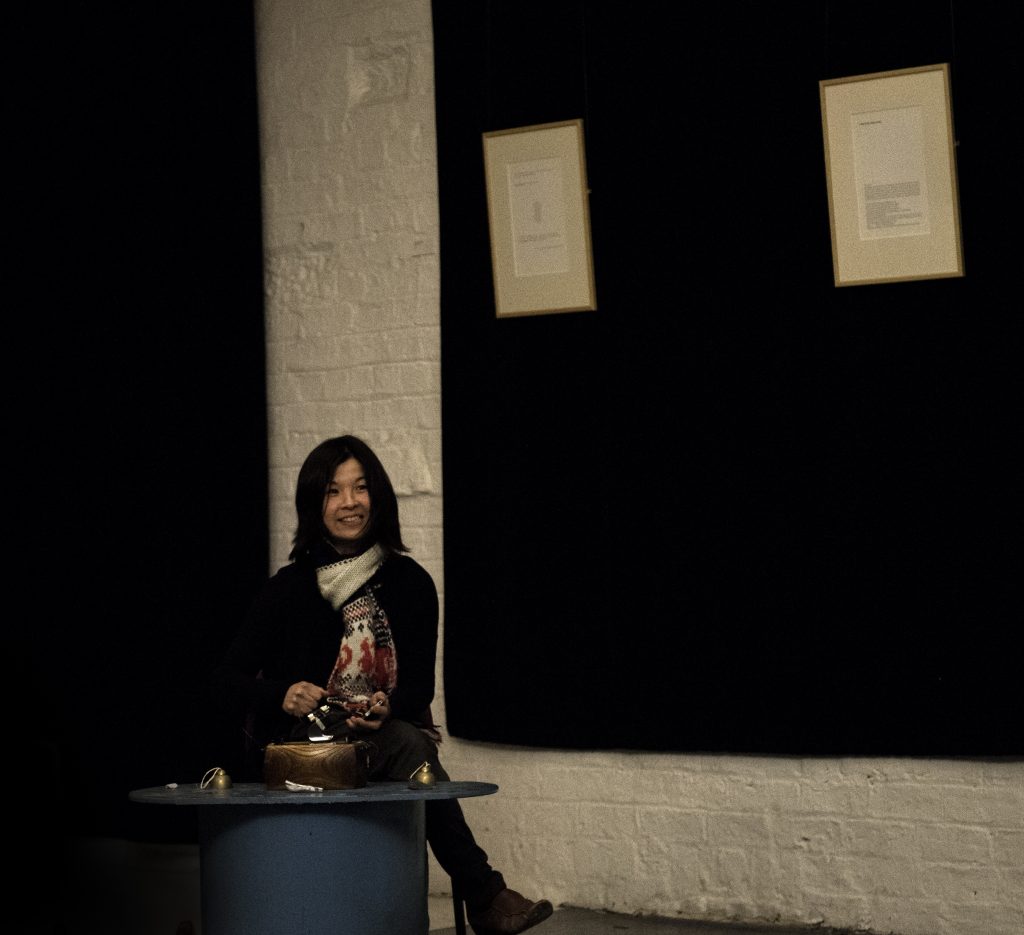
I have just completed recording quite a large scale composition, places and pages, with Cristián Alvear, Cyril Bondi, Christian Müller, D’incise and Stefan Thut, and am writing the twenty-one commentaries regarding the piece for Glissando magazine curated by Pawel Szroniak. I am also writing an article on Shiomi Mieko and Taku Sugimoto for the next edition of the online journal Sound American. There will be a new mumei journal, a renewed name for reductive journal that I have been co-editing, FIVE with a guest curator Audra Wolowiec, and some great releases on melange edition soon. I am also co-directing AME (Art/Music/Experimental) that will deliver concerts and exhibitions in North England. We hope to invite national and international composers and artists to examine the experimental music scene in this rural area.
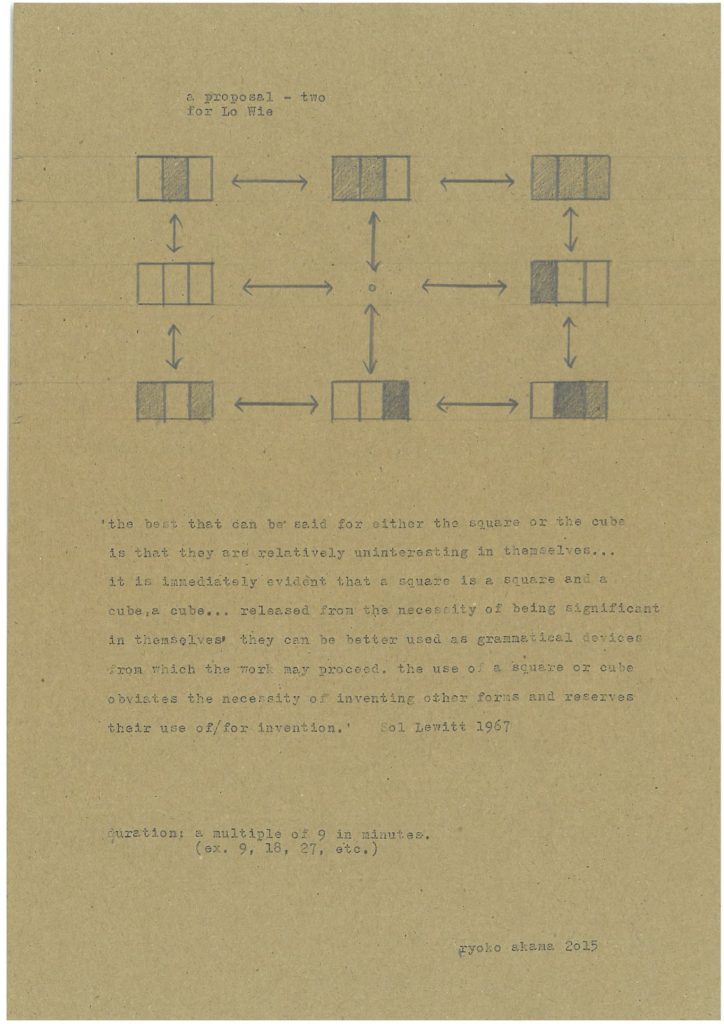
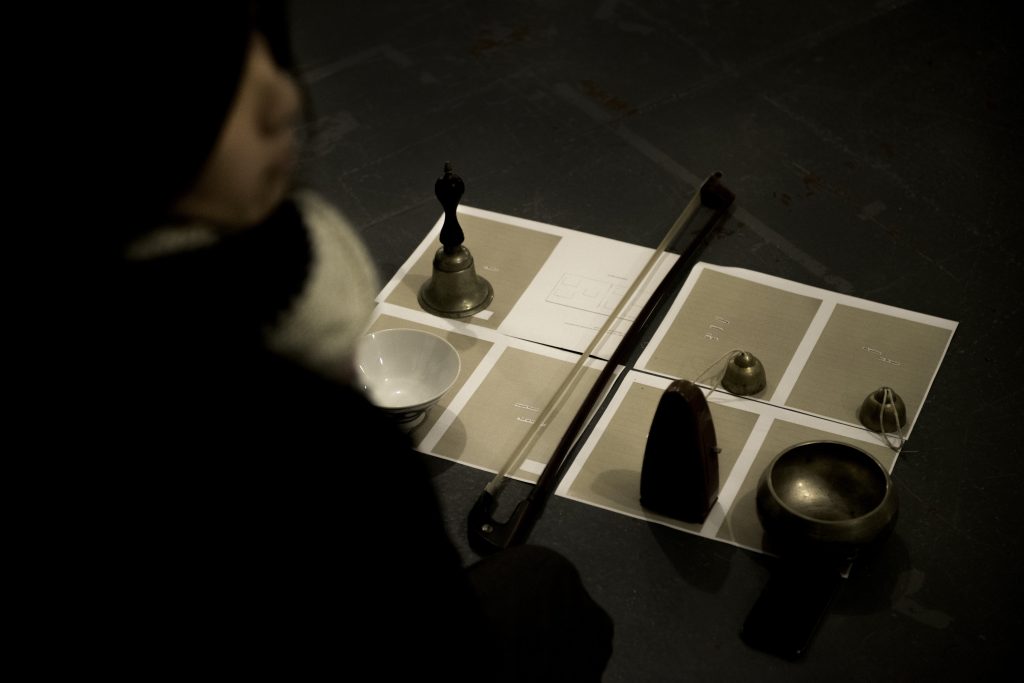
I will be performing a lot with a diverse group of people including lo wie and Miki Yui in October and November 2016. My proposal series composition keeps continuing to increase in number, and I am currently making _six, _seven and _eight for different performers, which I am very much looking forward to. Most importantly, I am now looking into short residencies so that I am able to embody my ideas as sound installations in specific spaces.
What work or topics are you most excited about these days?
I am mostly excited about my studio time alone. I don’t particularly intend to work alone but as I am far away from big cities and living in the countryside, everything becomes somehow self-taught and self-pursuing. Then, I have the more social side of life, meeting people and finding wonderful works in various occasions. Because my environment is not 100% in the art culture, I don’t take anything for granted. So, when I feel connected to something/someone, I get incredibly excited. I am interested by works that structure (compose) time and space in a very particular way. Recently, I was moved by experiencing works of Arjan Janssen, Mona Hatoum, Anne-F Jacques, Joseph Kudirka, Joseph Clayton Mills, Alexander Calder (there was a retrospective solo exhibition at Tate which was superb), Not Vital, Taku Sugimoto… I have been discovering a lot of films that can nurture space in viewers’ mind as well. It is not about genre for me but is about minimalistic approaches, and their wonders and confidence to embody the ideas and intents, that make me tuned into where I am.
What could be done to improve/enrich/support this field
You mean, quality-wise or promotion-wise, or both?
However you think it most needs to be supported, or whichever side is more interesting to you. Both would be fine, but only if you feel you want to answer both.
No boundary between academics and non-academics. Much better balance between female and male creators. Collaboration between broader genres of composers, performers and artists. Stronger support to practitioners by buying their physical projects such as CDs, artworks and books. More diverse and risky choices by curators. Less hierarchy.